
What a Strong
Same-Vendor Accessibility Operating Model Looks Like
- Published on: October 9, 2026
- Updated on: November 3, 2026
- Reading Time: 3 mins
-
Views
10 Stages of Same-Vendor Operating Model
1. Mapping the Scope
2. Testing a Representative Sample
3. Getting Sign-off on the Approach
4. Fixing the Sample
5. Retesting Independently
6. Running Quality Passes
7. Having the Client Check the Work
8. Scaling to Full Production
9. Mining the Defect Data
10. Reporting and Handing Off
What Makes the Model Work
FAQs
It’s not uncommon for companies to prefer two different vendors to handle accessibility audits and remediation because it leads to stronger checks and balances. But this does not necessarily guarantee better quality. It all comes down to whether the process has the right controls built into it, including clear scope, independent retesting, client checkpoints, and traceable outcomes.
A single accessibility vendor can still be just as rigorous, as long as the team fixing the problems isn’t the same team approving the fix.
A connected accessibility lifecycle can improve accountability, reduce handoffs, and create better opportunities for learning and process improvement.
10 Stages of Same-Vendor Accessibility Operating Model
Based on what I’ve seen work, here’s a ten-stage same-vendor operating model I’d recommend:
1. Mapping the Scope
Before any testing starts, the vendor inventories every product surface, content type, template, platform, configuration, user group, traffic, deadline, and desired coverage. This inventory is what keeps later audits from missing content types that slip past everyone to flag.
2. Testing a Representative Sample
The accessibility audit starts with a thin slice: a sample chosen to cover meaningful variation and trickier corner cases, not just the easy wins. The client reviews these early results to check whether anything significant got missed.
3. Getting Sign-off on the Approach
Full-scale work doesn’t begin until the client has approved how the audit is being interpreted. This step catches disagreements about methodology early, before they turn into disputes over hundreds of findings later in the project.
4. Fixing the Sample
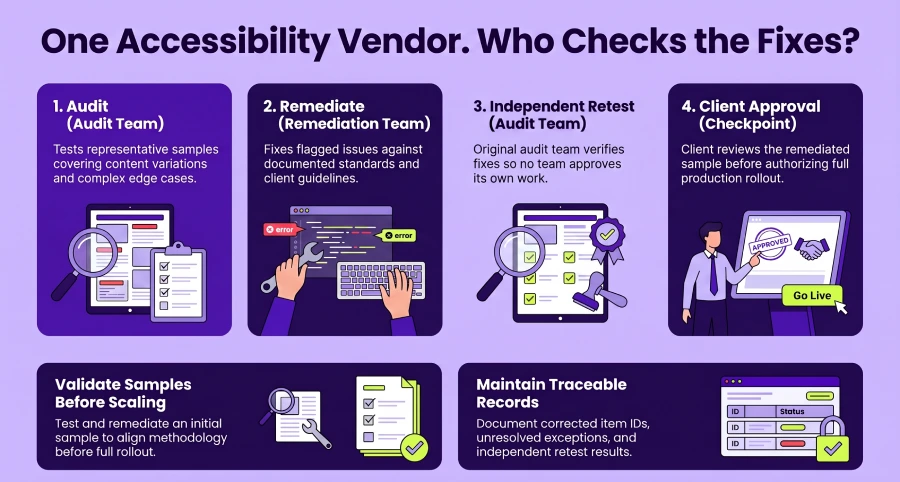
A separate team, not the auditors, takes the agreed sample and remediates it against documented practices and whatever standards the client has set as part of the accessibility remediation process. Keeping this team separate from the audit team is what makes the next stage meaningful.
5. Retesting Independently
The fixes go back to the original audit team for regression, not to the team that made them. Nobody signs off on their own work. The same eyes that flagged the defect confirm it’s actually resolved.
6. Running Quality Passes
Applicable automated tools get rerun at this point, followed by manual and assistive-technology testing. Automation handles the repeatable checks; people handle the behavior a script can’t judge.
7. Having the Client Check the Work
Before the model rolls out any further, the client reviews the remediated sample directly and can raise concerns. This checkpoint keeps a bad approach from being discovered only after it’s already been applied everywhere.
8. Scaling to Full Production
With the approach validated on a sample, the same audit, remediation, and regression loop runs across the full agreed scope.
9. Mining the Defect Data
Once a phase wraps, the defect data gets reviewed for patterns: which categories keep showing up, which checks are worth automating, which defects could have been prevented upstream, and where the process itself can be improved.
10. Reporting and Handing Off
The engagement closes with traceable outputs: corrected item IDs, any unresolved exceptions, a clear sign-off status, and publishing support the client can act on.
This model protects quality without the coordination burden of two unrelated vendors.
What Makes the Model Work
A same-vendor model only works when independence and accountability are built into the process. Separate audit and remediation teams, client checkpoints, and independent retesting create clear points of accountability throughout the work.
The result is a connected accessibility lifecycle with clear evidence from finding to fix to sign-off.
If this is the level of process you’re looking for in an accessibility partner, Magic EdTech’s Digital Accessibility Solutions can show you how this model applies in practice.

Tarveen is a future-focused accessibility leader with 18+ years of experience in digital quality and compliance, leading enterprise accessibility roadmaps across platforms, content, and learner experiences. A CPWA, DHS Section 508 certified expert, and Accessible Document Specialist (ADS).
FAQs
It depends on who has the ability to contest a finding or decline a fix in either option, rather than being determined based on the number of vendors used. The same vendor solution must maintain independent auditing and remediation processes and approval points for the client. If the vendor doesn't have an explanation of that process, then handoffs alone are not a good enough reason for consolidation.
Begin with how much variety exists within the audit scope, rather than beginning at a percentage of pages or files. Have the vendor explain how the sample accounts for all the variety in content, templates, platforms, configurations, and hard cases. If the client finds a material flaw, expand the sample size.
Seek confirmation of how each problem led to its fix, the results of the retest done independently, and the new status of the matter. Ensure that the transition makes clear which problems were solved and which exceptions remain unsolved. Decide in advance who will accept exceptions and sign off on them.
Refer to the method and standards accepted by the client at the beginning of remediation work, and not to any new definitions proposed by one of the teams. The finding remains open until it is approved. In case of an interpretation problem involving the client. The team responsible for fixing the finding cannot confirm it independently.
Focus the client’s decision-making power at the decision points that are already present in the model: evaluation of the initial results, approval of the methodology, and verification of the remediating sample. Each review should be based on a decision, for instance, whether the coverage is satisfactory or the methodology is ready to be implemented.

Get In Touch
Reach out to our team with your question and our representatives will get back to you within 24 working hours.